Ilya Muromets: The World’s First Strategic Bomber

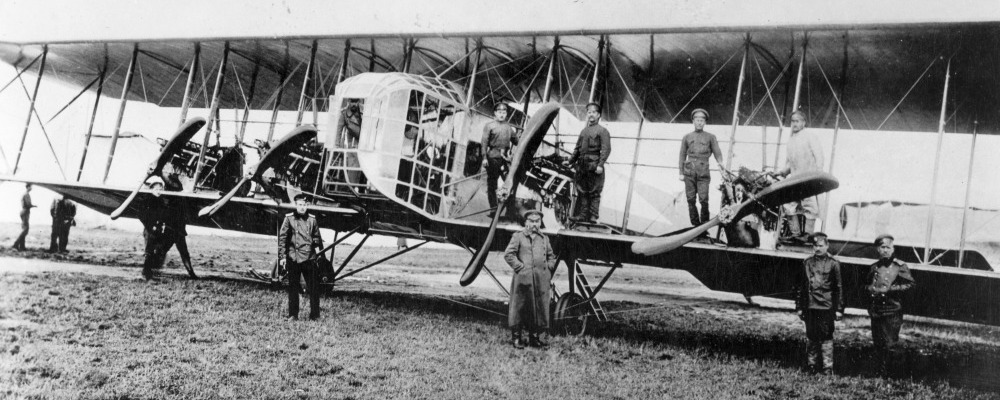
Ilya Muromets S-27 E (Yeh-2): San Diego Air & Space Museum. Public Domain.

Long before the era of the B-17, Lancaster, or Heinkel He 177, the Russian Empire fielded a bomber that fundamentally redefined what an aircraft could be. The Ilya Muromets, designed by Igor Sikorsky and first flown in 1913–14, was the first four-engine bomber in history, and the first aircraft conceived from the outset for long-range, heavy-load bombing missions. While contemporary aircraft in Europe were limited to short-range reconnaissance and modest payloads, the Muromets was an ambitious leap ahead: a multi-crew, heavily armed, high-endurance platform that could strike deep behind enemy lines.

Its influence would reverberate for decades. The innovations introduced on the Ilya Muromets—ranging from integrated bomb bays to defensive gun positions and in-flight engine serviceability—anticipated many of the design elements that would become standard in Second World War strategic bombers. Though built in relatively small numbers, and limited by the industrial capacity of Imperial and early Soviet Russia, the Muromets flew hundreds of combat sorties, helped establish the first true bomber squadron in history, and demonstrated that the age of strategic airpower had begun.

This post explores the origin, evolution, and operational legacy of the Ilya Muromets, from its roots as a flying salon for the Tsarist elite to its role in pioneering multi-engine bombing doctrine during World War I and the Russian Civil War. The story begins not with bombs, but with ambition: the idea that the sky could carry not just observers, but an entire coordinated crew, armed and purposeful, over vast distances

Precursor to a Bomber: The Grand and Its Lessons

In 1912, Igor Sikorsky, chief engineer at the Russo-Baltic Wagon Works (RBVZ), began developing what would become the world’s first successful four-engine aircraft. Designated the S-21 and informally known as The Grand, it was conceived as a long-range luxury airliner. At a time when even two-engine aircraft posed major aerodynamic and structural challenges, Sikorsky’s design broke new ground. It featured in-flight engine access, an enclosed cockpit with dual controls, and structural endurance suitable for extended operations.
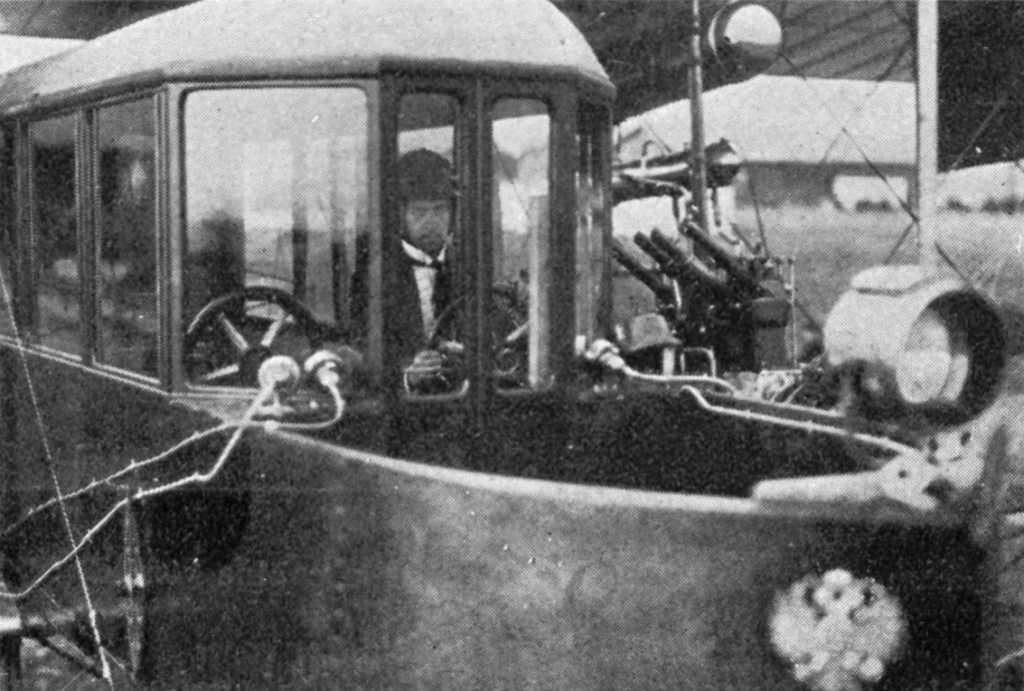
Igor Sikorsky at the wheel of the S-21. Public Domain

Initial flights in early 1913 used two Argus engines, but the aircraft soon flew with four in a tandem push-pull layout. With a wingspan of over 27 meters and a maximum loaded weight above 4,000 kilograms, The Grand, also known as the Russky Vityaz and Bolshoi Baltisky, proved that large, multi-engine aircraft could be stable and controllable. Public interest surged after its successful flight on May 13, 1913, though its career was cut short by an accident later that summer. Sikorsky used the lessons learned to develop a new design with increased lift capacity, improved crew coordination, and greater combat potential.

From Salon to Strategy: The Birth of the S-22

Sikorsky’s follow-up, the S-22, retained the core architecture of The Grand but expanded it into a more refined platform. Still intended as a civilian aircraft, it featured a fully enclosed and insulated cabin with upholstered seating, electric lighting, heating, a lavatory, and even a sleeping berth. It was the first aircraft to integrate the cockpit fully within the fuselage, streamlining both aerodynamics and crew workflow.

The aircraft used four Argus engines mounted in a tractor configuration along the leading edge of the lower wing. Engine nacelles were spaced well outboard of the fuselage and included access panels for in-flight maintenance. Structurally, the fuselage was a timber box reinforced with wire bracing, extending into twin tail booms that supported a cruciform tail. With a wingspan over 30 meters and a takeoff weight exceeding 4,600 kilograms, the S-22 had unmatched range and payload for its time.

By early 1914, military observers began attending test flights. The aircraft’s endurance, redundancy, and crew accommodations suggested broader applications. In the context of rising international tension and the limitations of existing reconnaissance aircraft, Russia’s General Staff began evaluating the S-22 for military service. A demonstration flight with officers aboard proved decisive. Sikorsky was tasked with adapting the aircraft for combat, and ten were ordered in a revised configuration. The platform was formally renamed Ilya Muromets, invoking the legendary Russian folk hero.

Entering Service: The Ilya Muromets at War

At the start of the First World War, the Imperial Russian Air Service had two operational Ilya Muromets aircraft. Wartime conditions made expansion difficult. The originally planned German Argus engines were no longer available. Only aircraft No. 135 retained them; subsequent airframes used French Salmson engines, including the 14-cylinder 2M7 (200 hp) and the 9-cylinder M9 (130 hp). These were mounted asymmetrically to balance thrust and maintain yaw stability.

On August 14, 1914, the Ministry of War approved the organizational structure for Muromets crews. Each aircraft carried four officers (including a commander and artillery officer), one administrative official, and forty enlisted personnel. Armament included a 37 mm Hotchkiss cannon for anti-Zeppelin use, two Maxim machine guns, two Madsen light machine guns, and two Mauser pistols. The Hotchkiss cannon, with 500 rounds, reflected the strategic role envisioned for the aircraft early on.
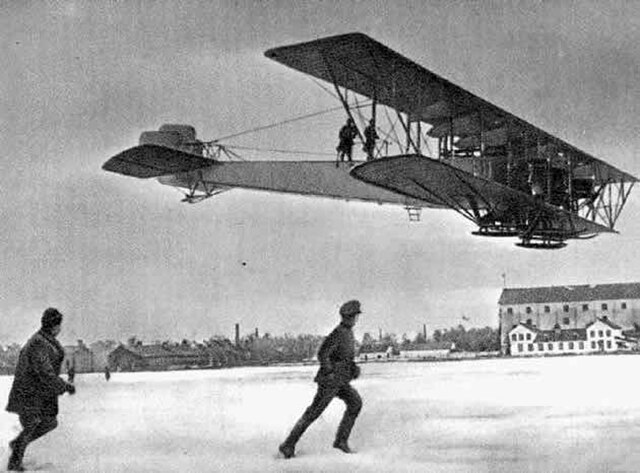
Ilya Muromet in flight. Public Domain.

Operational experience with the A- and B-series Ilya Muromets aircraft exposed several shortcomings rooted in their civilian design heritage. The large passenger compartments, numerous side windows, and interior fittings intended for comfort contributed excessive weight and aerodynamic drag. Additional fuel tanks and structural reinforcements (added to extend range) further degraded performance. In response, aircraft No. 137 (Muromets III) received significant modifications in November 1914. The forward artillery platform was removed and replaced with a detachable nose mount for a machine gun, and auxiliary fuel tanks were eliminated to reduce structural weight and improve climb rate.

Aircraft No. 143, completed in October 1914, marked the end of the B-series and the transition toward a more militarized airframe. In response to frontline feedback, Sikorsky initiated development of a new variant specifically designed for combat.

Redesign for War: The “Lightened Combat” Muromets

By the autumn of 1914, field reports had made clear that the Ilya Muromets required fundamental revision if it were to serve effectively in a sustained combat role. The next iteration, known informally as the “lightened combat” model, incorporated significant aerodynamic and structural changes. Aircraft Nos. 149, 150, and 151 formed the first production run of this configuration.

The fuselage was shortened by nearly two meters and narrowed to reduce surface area and overall drag. The wingspan was trimmed by approximately three meters. The nose section was reshaped to improve both forward visibility and aerodynamic efficiency. Superfluous features from the aircraft’s civilian origins, most notably excess windows, were eliminated. Internally, the cabin layout was reconfigured to accommodate gunners, observers, and a dedicated bombardier. Most significantly, an enclosed bomb bay was added, enabling ordnance to be released directly from within the fuselage. This represented one of the earliest examples of a fully integrated bomb delivery system, a departure from the improvised release mechanisms used by most contemporary aircraft.

These modifications were more than technical; they reflected a broader doctrinal shift. The Ilya Muromets was no longer treated as a large reconnaissance platform or a passenger aircraft adapted for bombing. It had evolved into a purpose-designed strategic bomber—one capable of carrying a full crew, delivering substantial payloads over operational distances, and returning intact through defensive firepower and structural redundancy.

Refinements to the platform continued throughout the war. In the autumn of 1916, two new variants entered service: the E model and the G model. Of these, the E was especially notable as the largest aircraft produced in the world at the time. It was equipped with four Renault engines, each generating 220 horsepower, a significant upgrade over the 160 horsepower output of the earlier Salmson-powered variants. These engines improved both climb rate and reliability, extending the Muromets‘ operational viability into the final phases of the war.

Into Combat: Operational History of the Ilya Muromets

In late 1914, following the redesign of the airframe, the Imperial Russian Air Service began forming the world’s first dedicated heavy bomber unit: the Eskadra Vozdushnykh Korablei (EVK), or Squadron of Flying Ships. Officially established in December, the EVK initially fielded four Ilya Muromets aircraft and was headquartered near Warsaw.

The squadron’s first operational sortie took place in February 1915, targeting German railway infrastructure near Mlawa. Thereafter, the EVK launched a sustained campaign of strategic bombing along the Eastern Front, striking troop concentrations, supply depots, and rail hubs. Missions were typically flown at altitudes between 1,500 and 3,000 meters, safely above the range of most rifle fire and early anti-aircraft guns.

Between 1915 and 1917, the Ilya Muromets fleet flew over 400 sorties, delivering bomb loads that increased from approximately 300–400 kilograms to nearly 800 kilograms as engine performance and structural refinements progressed. The aircraft were also used for reconnaissance, aerial photography, and psychological operations, including leaflet drops and low passes over enemy positions.
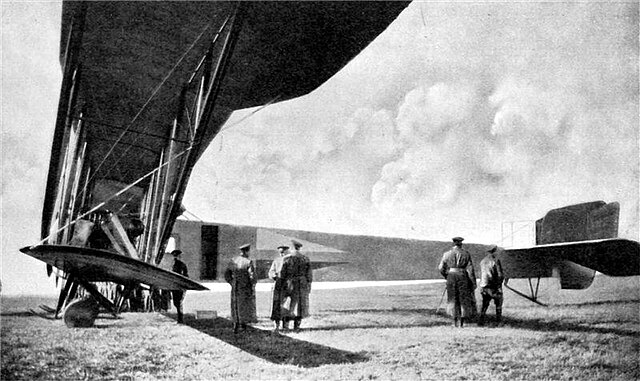
Ilya Muromets. Public Domain.

Defensive armament evolved to counter the growing German fighter threat. By mid-1915, newer variants carried as many as seven machine guns, with crew stations in the nose, fuselage waist, and tail sections. The combination of altitude, firepower, and crew coordination made the Muromets one of the most survivable aircraft of the war. Only one was confirmed lost to enemy fighters during its entire operational life.

In his memoirs, Igor Sikorsky described a dramatic incident that highlighted the aircraft’s defensive capability:

“On April 25, 1917, the ship ‘Ilia Mourometz XV,’ under the command of Captain Klembovsky, while returning from a bombing raid, was attacked by a group of three pursuit planes. The ship opened fire from its four machine guns. Soon afterward one of the pursuits was hit, fell and crashed in the woods. A few minutes later a second pursuit plane was hit and dropped down. After that the attack was discontinued and the third pursuit plane turned away. The ship was slightly damaged by bullets and one man of the crew was wounded.”

Typical crews included five to seven personnel: pilot, navigator, bombardier, mechanic, and several gunners. Flights often lasted several hours, and crews operated under difficult navigational conditions with only rudimentary instruments and limited radio equipment. Despite these limitations, the Ilya Muromets demonstrated the viability of multi-crew strategic bombing, a concept that would become central to military aviation in the decades to follow.

However, maintaining the aircraft in field conditions proved challenging. The engines required meticulous servicing, and the EVK’s ground crews lacked adequate training. One staff captain, Pankratyev, expressed frustration in a wartime report:

“The unpredictable operation of the ‘Muromets’ at the war front puts its crews in very difficult conditions, which could lead to accusations of lack of activity and unwillingness to work… When the entire army is striving with all its might to fulfill its duty, the ‘Muromets’ crews, during periods of aircraft failure, are doomed to inactivity, which, of course, is unacceptable.”

To improve operational reliability, Pankratyev proposed a solution:

“It would be desirable to supply the ‘Muromets’ crews with two ‘Voisin’-type aircraft. This would allow the unit to continuously carry out its assigned tasks, fulfilling them either with the ‘Muromets’ or the ‘Voisin,’ depending on the circumstances.”

Despite these obstacles and its limited production—only about sixty units were built—the Ilya Muromets had an outsized operational impact. In an era dominated by light biplanes and makeshift bombers, it stood out as a true strategic system. With its heavy payload, long range, and robust defense, the Muromets helped define the basic attributes of the heavy bomber class for the next generation of air warfare.

Final Missions: The Ilya Muromets in the Russian Civil War

After the collapse of the Eastern Front and the Bolshevik seizure of power in late 1917, surviving Ilya Muromets aircraft came under the control of the nascent Workers’ and Peasants’ Red Air Fleet. Several aircraft remained airworthy in Petrograd and Moscow, operated by former Imperial crews who had aligned themselves with the new regime.

In early 1918, the Muromets were formally integrated into the Red Air Fleet. Their crews were reorganized into new detachments, sometimes led by elected commanders in keeping with early Soviet military practice. Maintenance, however, became a persistent challenge. A shortage of spare parts, experienced mechanics, and aviation fuel restricted flight readiness. Still, a limited number of sorties were flown in the early stages of the Russian Civil War.

Muromets aircraft saw action in southern Russia, particularly around Tsaritsyn (modern Volgograd) and in campaigns against White Army forces in Ukraine. Their operational utility was constrained by their size, complexity, and high maintenance requirements. Nevertheless, when employed, they conducted bombing raids, reconnaissance, and leaflet drops—serving as both tactical assets and psychological instruments.

One crew member, A.K. Petrenko, recounted a mission against White cavalry near the Don region in September 1919:

“The leaflets were dropped. Romanov turned the plane back, but suddenly another column of cavalry appeared on the ground. We still had four unused bombs; the appearance of the White cavalry column was very timely. But then something happened that made us seriously reconsider the tactics of bombing moving enemy units… We flew after the column and had almost caught up with it when, to our surprise, the cavalry showed no intention of scattering, as they usually did during air raids. Suddenly, the column turned around and galloped straight toward the aircraft. We didn’t have time to drop a single bomb—the cavalry had already raced beneath us. Romanov made a wide turn before we went back and caught up with the column again. The White Guards repeated their maneuver, but two of our bombs still fell at the rear of the column. Then, turning around, we flew at low altitude and strafed the cavalry with machine-gun fire.”

By 1920, the remaining Muromets aircraft were mostly retired. One or two were still flown on ceremonial occasions or used for training, but the pace of technological change had rendered the design obsolete. Yet in Soviet memory and propaganda, the Ilya Muromets retained its symbolic weight. As the world’s first operational strategic bomber, it remained a proud artifact of Russian innovation—honored less for its final missions than for the doctrine it helped to create.

Conclusion: Strategic Aviation’s First Giant

The Ilya Muromets was more than a technological achievement; it marked the birth of a new class of weapon. As the first aircraft purpose-built for long-range, heavy bombing, and the first to fly operational missions with a four-engine configuration, it demonstrated that size, range, and multi-crew coordination could be harnessed to strategic effect. In contrast to the improvised bombers of the era, often little more than scouts fitted with small payloads, the Muromets was designed from the outset to carry substantial ordnance over significant distances and return with its crew intact.

Its service on the Eastern Front proved that large aircraft could conduct regular, multi-hour sorties with onboard gunners, bomb bays, and in-flight engine maintenance. Though only around sixty were built, the Muromets flew more than 400 combat missions, many of them deep behind enemy lines. Remarkably, only one was confirmed lost to enemy fighters, highlighting the advantage provided by defensive firepower, altitude, and crew redundancy.

The innovations pioneered in the Ilya Muromets—enclosed fuselage design, integrated bomb release systems, multi-engine reliability, and coordinated defensive armament—prefigured the core attributes of strategic bombers deployed during the Second World War. Aircraft such as the Handley Page Halifax, the Boeing B-17 Flying Fortress, and the Avro Lancaster followed principles first tested over the Eastern Front in 1915.

What began as a flying salon for Russia’s elite became a prototype for the future of aerial warfare. The Ilya Muromets was not only the world’s first four-engine bomber; it was the conceptual blueprint for the strategic bomber as a military instrument. Its legacy is measured not only in missions flown, but in the evolution of airpower that followed.

Patrick Kinville writes about Russian and Soviet aviation history. This article is part of an ongoing project exploring early military airpower.
Polikarpov’s I-15 and I-15bis biplane fighters

The Polikarpov I-15 was a biplane fighter that was developed in the interwar period and would go on to see extensive use during the Spanish Civil War, the Second Sino-Japanese War, the Battle of Khalkin-Gol, the Winter War, and World War II. While the I-15 was a quality aircraft for its time, it quickly became obsolete in the face of rapid advancement in aviation design the world over. Nevertheless, it continued to be used for a number of years in several different roles, and was an integral part of the Soviet Union’s first line of defense against the Luftwaffe in June of 1941. Severely outclassed by Germany’s Messerschmitt Bf-109 fighter, the I-15 played the vital role of holding the line against the German military’s onslaught during the early stages of the war when failure to do so would have been disastrous. Despite suffering heavy losses against the Luftwaffe, the I-15s did manage to help fight off the advancing Germany military for long enough for the Soviet Union to receive Lend-Lease fighters from the West and for the Soviet aviation industry to begin mass producing advanced fighters such as the La-5/7 and Yak-7/9/3.

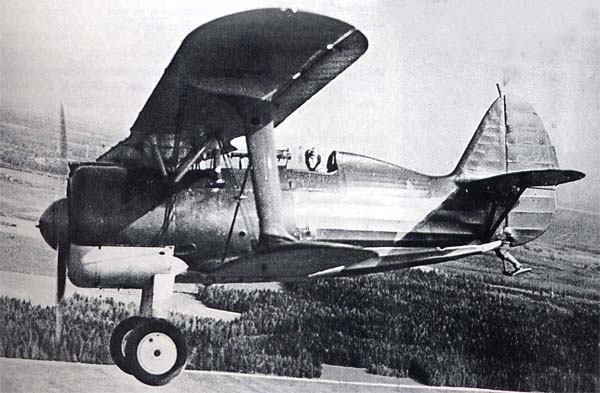
The development of what would come to be the I-15 started in 1924, when Nikolai Polikarpov began work on his first biplane fighter: the 2I-N1. While serial production of this early fighter was not pursued, it did serve as a basis for Polikarpov’s future designs, including the I-3 and I-5. Produced between 1931 and 1934, production totals for the latter would reach more than 800. In 1933, Polikarpov sought to a develop a new fighter with increased speed and maneuverability, which resulted in the I-14a gull-winged radial-engine biplane. As Pavel Sukhoi was developing a monoplane fighter with the designation I-14 at the same time, the decision was made to redesignate Polikarpov’s new aircraft I-15, with the prototype number TsKB-3.

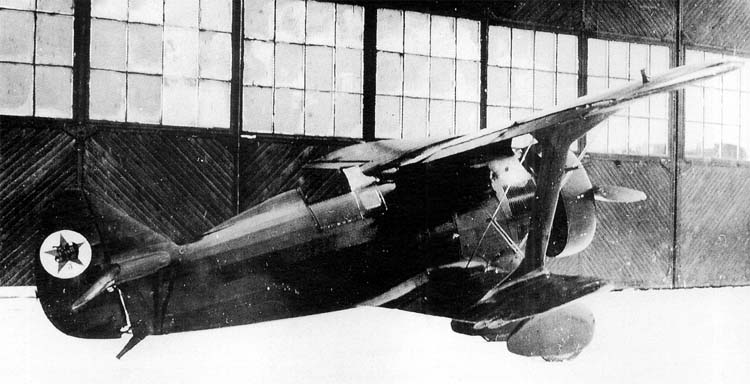
Construction of the first TsKB-3 was completed in October of 1933, with state trials undertaken later in the year. During factory and state testing, the new biplane did not fail to impress Soviet test pilots and engineers. With an ability to reach 5,000 meters (16,250’) in just 6.2 minutes, and the fact that it could make a 360-degree turn in only 8 seconds (which set a record), the TsKB-3 proved to be more maneuverable than any other Soviet fighter at the time.  Indeed, famed Soviet pilot Valeriy Chkalov himself carried out the flight tests, and was enthusiastic about the new biplane fighter’s maneuverability.

i15-4

TsKB-3 prototype. Photo source: Airwar.ru

Even before the TsKB-3 underwent state acceptance trials, preparations were underway to mass produce the biplane fighter. Looking to speed up the Soviet Union’s technical advancement in the field of aviation, Soviet leaders in the early 1930s sought cooperation with aircraft companies in the US and Western Europe, both to import aircraft and to obtain licenses to produce aircraft engines and components (and entire airplanes) domestically. In April of 1933, an agreement was reached with Wright Aeronautical that gave the Soviet Union a license to build Wright’s new R-1820 9 cylinder radial engine, complete with blueprints and technical assistance. These engines would be used for serial-production I-15s (among other aircraft). The first Soviet-built Cyclone, given the designation M-25, was built in the summer of 1934, and serial production the license-built engines began the following year in the city of Perm. At first, the engines were produced from kits that were provided by Wright, with the only major difference between the R-1820 and its Soviet-built version being the latter’s use of metric components. By the end of 1935, however, the workers at Factory No. 19, led by Chief Designer and Technical Director Arkadiy Shvetsov, had obtained the technical know-how and domestically-built components to produce the engine without assistance from Wright. By the end of the year, a total of 660 M-25s had been built.

However, serial production of the I-15 was given the greenlight in early 1934, before production of the M-25 had been launched. Consequently, initial production aircraft were powered by imported Wright Cyclone engines. Others were powered by the M-22, a license-built version of the Bristol Jupiter radial engine. Despite the fact that the M-22’s output was 150 horsepower less than the M-25, the I-15s powered by the former could reach a top speed of 347 km/h, roughly 20 km/h less than the Cyclone-powered TsKB-3/I-15s. It wasn’t until early 1936 that Factory No. 19’s M-25s were mated with the I-15 airframe.

The baseline I-15’s armament consisted of four PV-1 7.62 mm machine guns, and it had the ability to carry four 10 kg (22 lb) bombs under the wings. The airframe itself was a mixed construction, and its defining physical feature was the gull-shaped formation of its upper wings. The TsKB-3 prototypes were equipped with Hamilton Standard propellers, but serial production I-15s utilized Soviet-built two-blade fixed-pitch propellers.

The first I-15s began entering service with VVS units as early as the end of 1934. While Soviet pilots enjoyed flying the new fighter, the biplane proved to be unreliable, as it suffered from frequent mechanical issues. For example, problems were often caused by the M-25 engines, which were installed without dampers, and consequently made the aircraft vibrate, which in turn added additional stress on the airframe. Moreover, fuel and oil leaks were a constant problem, and the wheel spats would at times become clogged with grass which would cause the aircraft to flip on its nose during landings. These and other glaring issues led the Soviet leadership to pause production of the biplane while Polikarpov worked to eradicate the aircraft’s deficiencies. Meanwhile, Polikarpov’s I-16 monoplane was being delivered to frontline units for the first time. Ultimately, VVS commanders preferred the I-16 over the plagued I-15, and the decision was eventually reached to cease production of the former after only 384 had been manufactured.

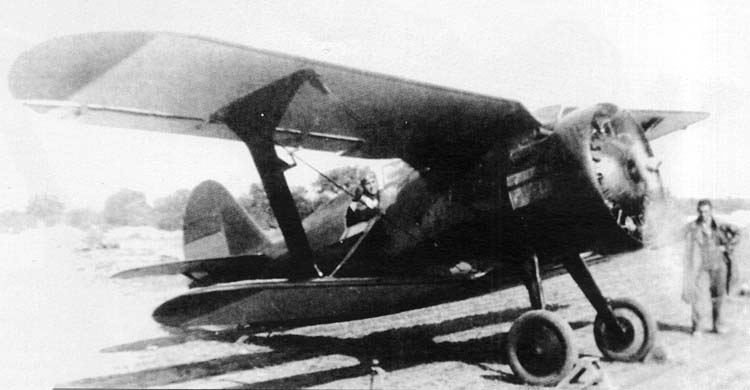
Nevertheless, a number of I-15s remained in service with the VVS and, more significantly, they were sent to the Spanish Republican Popular Front Government and were used against Franco’s Nationalists during the Spanish Civil War. In October of 1936, the first shipment of M-22-powered I-15s arrived in Cartagena. The shipment contained enough fighters to form two squadrons, which were initially manned mainly by Soviet “volunteers”. When more Spanish pilots entered the ranks of the two squadrons, the I-15 was affectionately nicknamed Chato (snub-nosed). The I-15s first saw combat on November 4, 1936, and were credited with shooting down two Ju-52/3ms and two CR-32 fighters. No Chatos were lost. During a separate battle on the same day, I-15s claimed four He-51s shot down. Over the next several days, another 12 enemy aircraft were claimed by the I-15 squadrons for the loss of two Soviet fighters. By the end of November, the I-15s had claimed 60 enemy aircraft shot down, a rather ambitious exaggeration. Nonetheless, during this period the Chatos were successful in defending Madrid from the Nationalists, causing the latter to temporarily halt daytime bombing sorties. However, with the introduction of more advanced German fighters, the I-15’s success eventually faded.

i15-10

Spanish I-15. Photo source: Airwar.ru

Deliveries of I-15s to the Republicans continued until the summer of 1937, when another two batches of M-25-powered Chatos arrived. While the exact number of I-15s delivered to Spain is unknown, historians estimate the number to be between 139 and 155. Meanwhile, the Spanish Republicans themselves were manufacturing I-15s under license, an agreement that was reached in early 1937. In all, the Republicans would build 237 I-15s. However, the number of airworthy Chatos continued to decrease throughout the course of 1937 and 1938, in part due to normal wear and tear on the aircraft, and in part due to the fact that the Nationalist side began introducing German Messerschmitt Bf-109s and Italian Fiat G.50s, aircraft that outclassed the now obsolete Chato. However, as would be demonstrated on a much larger scale during the Second World War, skilled Polikarpov pilots could achieve a certain (small) degree of success against the German Messerschmitts, given the right circumstances.  A Republican I-15 pilot, Joaquin Calvo Diago, told Carl A. Posey years later, “The Chato is simpático… was very maneuverable against the 109 [the Messerschmitt Bf 109]. It climbed well.” Nevertheless, the German pilots did show that more often than not, the I-15 was no match for the Bf-109, and Chato losses continued to increase exponentially. Indeed, by the end of the war, of the 1,400 Soviet aircraft of all types that had been sent to Spain during the Civil War, 1,176 had been destroyed (83%). Ultimately, the Republicans and their Soviet allies lost the war, though a total of nine Soviet I-15 pilots were awarded the Gold Star Hero of the Soviet Union during the fight against Franco’s Nationalists. At war’s end, the victorious Nationalists had captured 53 flyable Chatos, and they remained in service with Franco’s forces until 1950.

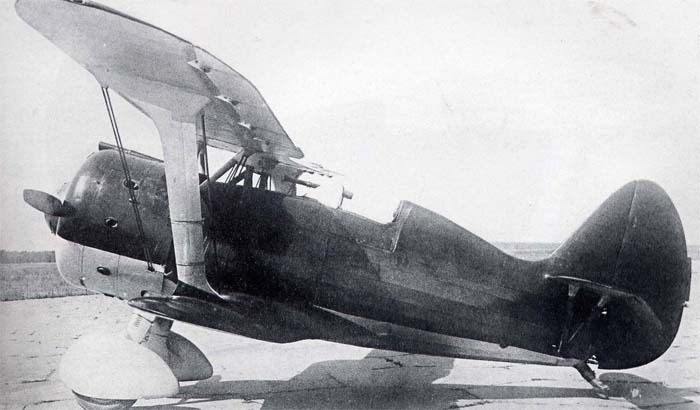
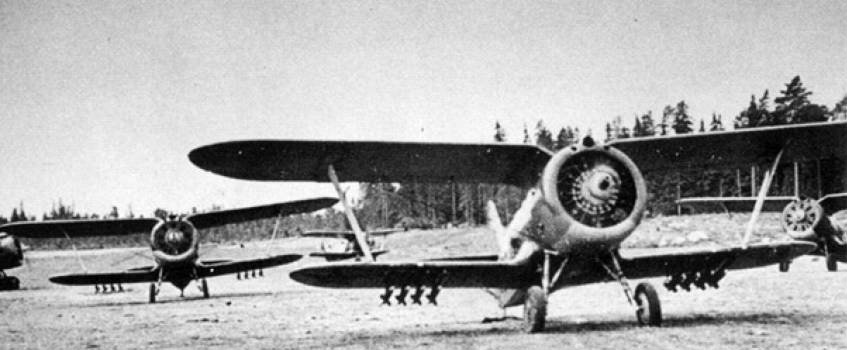
Meanwhile, an improved variant of the Chato, the I-15bis, was reaching VVS units back in the Soviet Union. When serial production of the I-15 was halted in 1935, Nikolai Polikarpov was urged by the Soviet leadership to work on a modification of the biplane that would eradicate many of the deficiencies of the I-15 and would also improve the fighter’s performance. The resulting prototype, TsKB-3bis, featured a longer span un-gulled upper wing that was modified in response to Soviet pilots’ complaints that the gulled wing of the I-15 restricted visibility. It was also equipped with an upgraded M-25V engine, and a larger engine housing which incorporated the entire frontal section of the fuselage. These modifications brought the serial I-15bis’ top speed to 379 km/h (256 mph), 29 km/h more than the baseline I-15. Like its predecessor, the I-15bis was armed with four 7.62mm PV-1 machine guns. However, the I-15bis could carry an additional 50kg (110 lb) of ordinance, bringing its total payload to 150 kg (330 lb). Moreover, it could carry up to six RS-82 rockets, which were found to be useful against German targets during WWII. The TsKB-3bis completed state trials in the fall of 1937, and entered serial production shortly thereafter.

i15b-2

I-15bis in flight. Photo source

A number of I-15bis’ were sent to Spain during the final stages of the Civil War, but arrived too late to see action. Nevertheless, the bis did see extensive combat even before Germany’s launch of Operation Barbarossa in June 1941. In November 1937, a batch of I-15s and I-15bis’ complete with Soviet “volunteers” was sent to the Nanking area to support the Chinese military against the invading Japanese forces. Flying primarily against Kawasaki Ki-10 biplanes, the I-15bis performed well against their obsolete Japanese counterparts, with the Ki-10s suffering heavy losses. Consequently, the Japanese leaders replaced the obsolete outdated biplanes with the modern Mitsubishi A5M2a monoplane fighters, which proved to be faster than the I-15bis, though less maneuverable. During air combat between the two types, it was found that the outcome was determined primarily by the skills of the pilots and the effective use of tactics as opposed to technological superiority, and the I-15bis’ combat performance against the A5M2a was therefore mixed. In January 1938, the VVS leadership decided to replace the I-15bis squadrons with I-16 squadrons, as it hoped to assess the capabilities of the latter against the A5M2a. However, I-15bis fighters were also given to the Chinese Air Force, which continued to fly the biplane fighters for some time, receiving a total of 186 examples from the Soviet Union. Despite some success shown by Soviet pilots over the A5M2s, Chinese airmen were typically poorly trained, and combat losses were consequently high. However, there were a number of highly-skilled Chinese pilots who flew the Soviet biplane, including ace Liu Chung-Wu, who scored 4 of his 7 victories while flying an I-15bis. The outcome of each individual aerial battle in the skies over China (and in every other theater, for that matter) relied on a multitude of factors, such as numerical superiority and quality of pilot, and was not determined solely by the type of aircraft involved. For example, in April of 1938, a force of 12 Ki-10s and three new Ki-27s claimed 24 I-15bis’ shot down in a single air battle. However, later that month, a mixed force of Chinese I-15bis’ and Soviet I-16s claimed 36 Japanese aircraft shot down. The Soviet-built biplanes were eventually superseded by deliveries of US-built aircraft to the Chinese forces.

The I-15bis was also used extensively by Soviet forces during the Battle of Khalkin-Gol against the Japanese military in the summer of 1939. While the bis performed well against the Mitsubishi A5M2a, the appearance of the faster Nakajima Ki-27 caused problems for VVS airmen. Indeed, Soviet pilots, in general, enjoyed success during the Battle of Khalkin-Gol, but by this time, the I-15bis proved to be obsolete compared to the Japanese Ki-27 and the VVS’ other two fighters (I-16 and I-153). By August, the poor performance of the I-15bis prompted the VVS leadership to relegate the biplane to reconnaissance and night patrol duties. However, despite the fact that the I-15bis was the Soviet air arm’s worst fighter, the presence of the more obsolete I-15bis’ was used to the VVS’ advantage. Due to the fact that the bis did not have retractable landing gears, Soviet pilots who flew improved Polikarpov I-153 biplane fighters would bait Ki-27s into attacking by flying with their landing gear down, making the Japanese pilots think they were inferior I-15bis fighters. Once the Ki-27s would get within range of the I-153s, the latter would raise their landing gears, apply full throttle, and engage the oncoming Japanese aircraft. Though the Red Army and VVS was victorious at Khalkin-Gol, the successful performance in the air was due primarily to I-16 and I-153 fighters. Nevertheless, the I-15bis’ career was far from over.

Despite the Red Army’s convincing victory against the Japanese, the Soviet Union’s next combat operation, the Winter War with Finland, which began on November 30, 1939, was not nearly as successful. Though significantly outmanned and outgunned, the Finnish military was repeatedly able to repel the Red Army until the Soviets eventually broke through in March of 1940. The VVS, which deployed 2,500 aircraft (mostly Tupolev SB bombers) at the outset of the war, enjoyed air superiority for most of the conflict. Nevertheless, the Finnish Air Force, which had only 114 combat aircraft fit for duty at the end of 1939, inflicted severe damage against the VVS, shooting down 200 Soviet aircraft during the war and losing only 62 of their own. However, the losses suffered by the VVS were indicative of a larger problem within the Soviet military in general (decimation of military leadership during the purges), and were not necessarily reflective of the aircraft flown by Soviet pilots. Indeed, the primary Finnish fighter, the Fokker D.XXI, was roughly equivalent to the Japanese Ki-27. The I-15bis comprised approximately 30% of the Soviet fighters committed to the war against Finland, though more often than not they were relegated to non-fighter duties.

Though the air battles fought against Japan and Finland had demonstrated the obsolescence of the I-15 and I-15bis fighters, when Germany invaded the Soviet Union in June of 1941, the VVS still had roughly 1,000 I-15s and I-15bis’ in their arsenal. Soviet pilots and ground troops recall how, on the first days of the war, the Polikarpov biplanes went up against the much faster Luftwaffe fighters and bombers, often with disastrous results. Leonid Mikhailovich Felman, a signals officer stationed in Kremenchuk in what is today central Ukraine, recalled the performance of the I-15/I-15bis on the first day of the war. “Biplanes- I-15bis. They said they showed themselves well in the battles with the Japanese [Khalkin Gol]. But this plane could catch up with neither Messerschmitts nor Dornier-13s. I asked the pilots: ‘well, how can you shoot down a plane, even if you can’t catch up with it?’ They said, ‘we must try to climb to get a speed equal to this plane’. But this, unfortunately, did not work.” An Il-2 Sturmovik pilot, Valentin Ivanovich Belikin, likewise remembered,  “….the SB was called a ‘high-speed bomber’ [SB= skorostnoi bombardirovshchik, fast bomber]. And its speed was very low, like our fighters! When we were in Armavi, they bombed us and bombed the city. Our fighters could not catch up with them: neither the Heinkel-111s nor other bombers. Our fighters were I-16s and I-15bis’! Because they had a lower speed! Why fight?! Us?! Against the Germans?! Well, no.”

Despite the abysmal performance of the I-15/I-15bis on the first days of the war, a number of Soviet pilots did achieve some success against their adversaries. Though the Polikarpov biplanes were slower than their German counterparts, their maneuverability was remarkable against the Bf-109s, and skilled Soviet pilots learned to accentuate the flight characteristics of the I-15s/I-15bis’ against the Luftwaffe’s superior aircraft, which enabled the occasional aerial victory over the Messerschmitts. Other pilots relied on luck in the face of German fighters. I-15bis pilot Vasiliy Kubarev recalled, “It was on this type of plane that I was able to shoot down my first plane- it was an Me-109 [Bf-109]. Four rockets were suspended under the plane. Well, when a lot of enemy planes appeared ahead of me, I released all four… all at once, without any interruption… he went into a flat corkscrew and fell to the ground…. The rest of the Germans turned and immediately left.” However, it must be stressed that, more often than not, the I-15 was no match for the Bf-109. “Our ‘Ishaks’, I-15s and I-16s were maneuverable,” one Soviet tank driver recalled, “but the Messers beat them mercilessly.”

i15b-8

I-15bis. Photo source: Airwar.ru

While the I-15/I-15bis floundered as fighters in the face of highly-trained Bf-109 pilots, the biplanes were slowly replaced by MiG-3, LaGG-3, and Yak-1 monoplanes, which relegated the Polikarpovs to ground attack roles, a capacity in which they had a greater degree of success. The biplanes lacked armor and were consequently susceptible to even small arms ground fire, but as anti-aircraft gunner Dmitry Poltavets noted, I-15bis and I-153 pilots who were tasked with carrying out grand attack missions against Axis positions developed tactics to protect the fragile biplanes from ground fire. “The fighters stationed at the airfield that we were instructed to guard, helped the infantry repel enemy attacks- they attacked Romanian trenches every day, threw hand grenades and small bombs. And they did everything intelligently. For example, one fighter would dive, and the second would immediately enter a dive to fire bursts at the enemy and protect the one who was coming out of the dive so that he was not shot down by rifles and machine guns, because the I-15bis and I-153 were poorly protected even from rifle fire. Apparently, for the enemy, such ground attacks were extremely unpleasant, because soon German planes began to bomb our airfield.”

The Polikarpov I-15 and I-15bis continued to serve in frontline units until the end of 1942, by which time the Soviet aviation industry had begun recovering from its massive evacuation eastward and the VVS was receiving large numbers of Lend-Lease aircraft from the US and the UK. Nevertheless, the biplanes continued to be used for secondary tasks through the end of the war, including reconnaissance and training duties. Georgiy Afanasev, who would later go on to fly Yak fighters, remarked, “we learned on old stuff. I-1, I-15, I-15bis… Take off and land on the airfield, and turn… I initially flew the I-15bis- such junk, you understand.” A Sturmovik pilot, Valentin Averyanov, similarly recalled learning first to taxi using an I-15 without wings and then learning to fly solo in the biplane. “It is difficult to take off in it,” he noted. Another Soviet fighter pilot, Anatoliy Bordun, learned to fly at the Kachin Military Aviation School in the Crimea, where cadets flew I-15s and I-16s. One of his classmates was Vasily Stalin, son of Soviet leader Josef Stalin. As Bordun recalled, “for security reasons, Vasily Stalin was trained separately. We had one instructor for a group of eleven people, and he had his own individual- Captain K.V. Marenkov, the best instructor at the school. In addition, Vasily Stalin had a separate hangar, where the aircraft that he flew- a DIT-2 and an I-15- were kept. The school management apparently decided that the I-15 was still safer than the I-16. Vasily’s planes were painted red. And we were instructed that when a red plane was airborne to not come close to it.”

At the time of its development, the Polikarpov I-15 was a modern fighter that was capable of taking on any potential adversary that was then in production. However, as is well know, aviation technology was advancing by leaps and bounds in the late 1930s, and what was one day a solid and advanced aircraft could the next day become obsolete. Though the Chato initially performed well during the Spanish Civil War, it was clearly outclassed by the Messerschmitt Bf-109s and Italian Fiat G.50s when the latter two entered service on the side of the Nationalists. Attempts to improve the I-15 in the I-15bis helped extend the model’s shelf life as a modern fighter for a short time, but it was once again outdone by the introduction of the Nakajima Ki-27 during the Battle of Khalkin-Gol. By the time Germany launched Operation Barbarossa in June of 1941, the obsolete I-15s and I-15bis’ were and integral part of the VVS’ first line of defense. While the biplane fighters were no match for the latest models of the Bf-109, they did serve a vital function during the early stages of the war: they staved off the German onslaught for long enough for Lend-Lease aircraft to arrive in large numbers, and for the Soviet aviation industry to mass-produce aircraft that were superior to the Luftwaffe’s fighters. By 1943, the Soviet Union was sending large numbers of advanced La-5 and Yak-9 fighters to the front, and the Western Allies were contributing thousands of Lend-Lease aircraft. Moreover, mass production of the Ilyushin Il-2 Sturmovik ground attack aircraft was in full swing. When it was no longer needed in these two roles, the I-15/I-15bis was used to train future Soviet pilots, which in and of itself is a vital function. The I-15/I-15bis may not have been a world-class fighter, but it certainly did the job required of it.

-Patrick Kinville

Bibliography:

  • Istrebiteli Polikarpova. Voina v Vozdukhe. No. 136.
  • Ivanov, Vladimir. Neizvestniy Polikarpov. Moscow: Yauza. 2009.
  • Gordon, Yefim. Polikarpov’s Biplane Fighters. Red Star No. 6. Midland Publishing. 2002.
  • Maslov, Mikhail. Polikarpov I-15, I-16, and I-153 Aces. Osprey Publishing. 2014.
  • Posey, Carl A. “The War Between the Wars: In the skies over Spain, pilots and airplanes. Air & Space Magazine. April 30, 2009.
  • Ya Pomnyu Project. www.iremember.ru 

The Soviet Polikarpov I-153 Chaika biplane


i-153-s-raketami-rs-82

Though it is perhaps not the most well-known Soviet aircraft, the Polikarpov I-153 Chaika (seagull) was one of the pillars of the VVS’ arsenal in the late 1930s/early 1940s. Seeing extensive action against the Japanese at the Battle of Khalkhin-Gol in 1939, the Chaika proved to be obsolete by June of 1941 at the time of the German invasion. Nevertheless, until the Soviet aviation industry could be evacuated to locations far from the frontline and more advanced fighters and bombers could be produced, outdated aircraft such as the I-153 Chaika, the I-16, and the I-15 were tasked with both providing close air support for the Red Army and engaging the Luftwaffe, which had at its disposal some of the best aircraft in the world at the time, including the notorious Messerschmitt Bf-109. Though the Chaika biplanes were no match for the sleek German fighter, the I-153, serving in a multitude of roles, was able to contribute to the slowing of the massive German advance, buying enough time for the VVS to both receive more advanced aircraft from the UK and US via the lend-lease program and to receive the latest La-5s, Yak-9s, and Il-2s from Soviet factories.

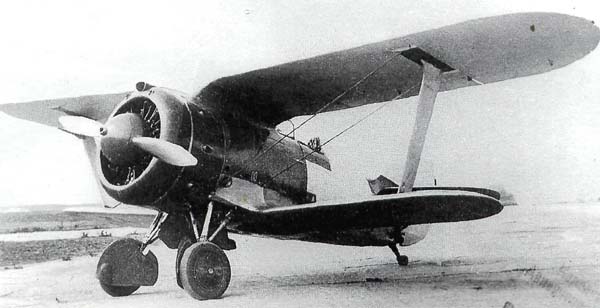
The Polikarpov I-153 was an improved design of the I-15 biplane, which had first flown in 1933. Soviet pilots typically gave critical reviews of the I-15, with some complaining that the gulled top wing obscured the field of vision and did not provide sufficient stability. Though Polikarpov himself was a proponent of the gull-wing design, he was told to remove the feature and install an improved M-25 engine. The new aircraft was designated the I-15bis, and went into serial production in 1937. Polikarpov, however, was displeased with the lack of maneuverability in the I-15bis, and set about designing yet another derivative of the I-15. Reverting back to the gull-wings of which he was a proponent, the aircraft designer listened closely to the suggestions provided by Soviet pilots who were flying his aircraft on the frontline in Spain. Hearing complaints of the low rate of fire of the PV-1 machine guns on the I-15bis, Polikarpov’s team affixed new ShKAS onto the prototype, increasing the rate of fire from 750 rounds per minute to 1,800. The team also sought to improve the speed and performance of the aircraft by installing a retractable landing gear.

i153-1

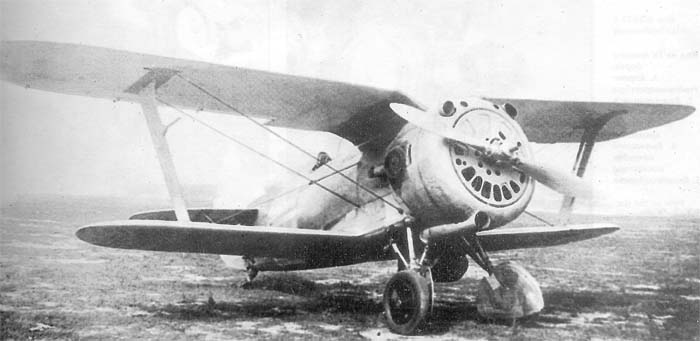
I-153 prototype. Photo source

Making its inaugural flight in August 1938, the new aircraft, with the designation I-153, performed much better than its predecessor, the I-15bis, and was put into production the following year, in time to get its first taste of combat at the Battle of Khalkhin Gol on the Mongolian-Manchurian border. According to reconnaissance pilot Iosef Birenberg, “These aircraft featured great maneuverability due to landing gear, and had four ShKAS machine guns, which provided a huge density of fire, more than eight thousand rounds per minute. This aircraft could also carry four bombs, up to 200 kilograms.”

In the first two months of the border war, known as Khalkhin Gol in Russia and the Nomonhan Incident in Japan, the Soviet Air Force sent their I-15bis and I-16 to go up against the Japanese Nakajima Ki-27s, with the Soviet side realizing that their two fighters were inferior to their Japanese counterpart. In early July, the first Chaikas arrived at the Tamsag-Bulak airfield, fresh from the factory. Over the next two months, the I-153’s performance, maneuverability, and four ShKAS machine guns helped the VVS turn the tide against the Japanese Ki-27s.

ki-27_1

Japanese Ki-27s. Public Domain.

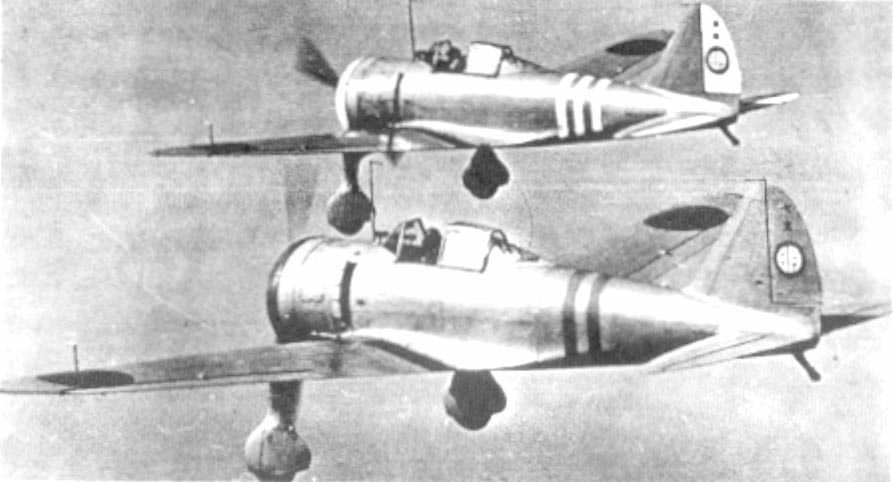
Japanese pilots quickly adopted different tactics to use while attacking the Chaikas, attempting to take advantage of the Soviet pilots’ poor forward visibility resulting from the gulled-wings. Soviet pilots, in turn, developed tactics to lure the Ki-27s in to attack, after which the pilots would use the I-153’s superior maneuverability to overtake the Japanese aircrafts. By flying with their landing gear down, the I-153 pilots would make it appear as though their aircraft were actually the inferior I-15 or I-15bis, inviting the Japanese to attack. Once the Ki-27s would get within range of the Chaikas, the latter would raise their landing gears, apply full throttle, and engage the oncoming Japanese aircraft.

Though the Red Army was victorious at Khalkhin Gol, the Soviet Union’s next combat operation, the Winter War with Finland, which began on November 30, 1939, was not nearly as successful. Despite being significantly outmanned and outgunned, the Finnish military was repeatedly able to repel the Red Army until the Soviets eventually broke through in March of 1940. The VVS, which deployed 2,500 aircraft (mostly ANT-40 bombers) at the outset of the war, enjoyed air superiority for most of the conflict. Nevertheless, the Finnish Air Force, which had only 114 combat aircraft fit for duty at the end of 1939, inflicted severe damage against the VVS, shooting down 200 Soviet aircraft during the war and losing only 62 of their own. However, the losses suffered by the VVS were indicative of a larger problem within the Soviet military in general (decimation of military leadership during the purges), and were not reflective of the aircraft flown by Soviet pilots. Indeed, the primary Finnish fighter, the Fokker D.XXI, was roughly equivalent to the Japanese Ki-27.

i153tk-1

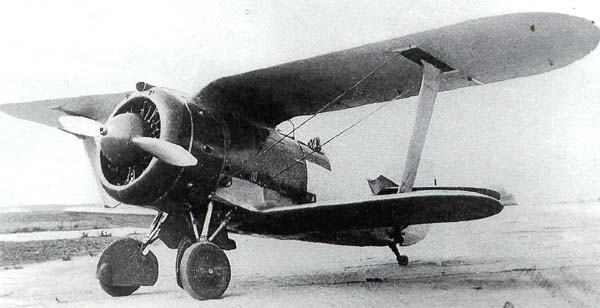
Polikarpov I-153. Photo Source.

In June of 1941, however, the I-153 would go up against some of the finest aircraft ever built in the finest air force ever assembled up to that point: the Luftwaffe. At the time of the German invasion, the Soviet Union’s fighter squadrons were comprised primarily of I-16s, LaGG-3s, Yak-1s, and I-153s, aircraft that were considered either obsolete or underpowered compared to the German aircraft that were causing mass destruction along the 1,200 mile front. Nevertheless, since the Soviet aviation industry would not be able to begin producing new designs until 1942 due to the evacuation of aircraft factories to the Soviet East, the VVS’ aircraft of the 1930s were tasked with halting the seemingly unstoppable German onslaught from the air.

Needless to say, this was a tall order to fill, but Chaika pilots, though flying against a far superior adversary, bravely went toe to toe with the seasoned Luftwaffe pilots. A fighter pilot with the 929 IAP, Evgeniy Pryanichnikov, recalled that in the early months of the war, “our regiment flew the 153 Chaikas, a renowned machine, which distinguished itself at the Battle of Khalkhin Gol, but by now was hopelessly outdated, much inferior in tactics and technical data to German aircraft.” Fighter pilot and Hero of the Soviet Union, Fedor Arkhipenko, noted that until 1943, Soviet fighters were simply not powerful enough to intercept German bombers. “At the beginning I-16s and I-153s could not catch up with the bombers even in a straight line,” Arkhipenko stated.

In these early months of the war, lacking an aircraft that could provide close air support, VVS leadership decided to use Chaikas as ground attack aircraft, despite the fact that the I-153s had little to no armor and were vulnerable to small arms fire from the ground (unlike the legendary Soviet ground attack aircraft that was introduced the following year, the Ilyushin Il-2). Anti-aircraft gunner Dmitry Poltavets described receiving close air support from I-15bis and I-153s during the defense of Odessa in the summer of 1941. During the battle, I-153s, “were assigned to help the infantry repel enemy attacks… One fighter would swoop down, and the second would immediately begin to dive at the enemy… in order to protect the first plane coming out of the dive from rifle fire and machine guns, because I-15bis and I-153 were poorly protected even by rifle fire.”

polikarpov_i-153_chaika

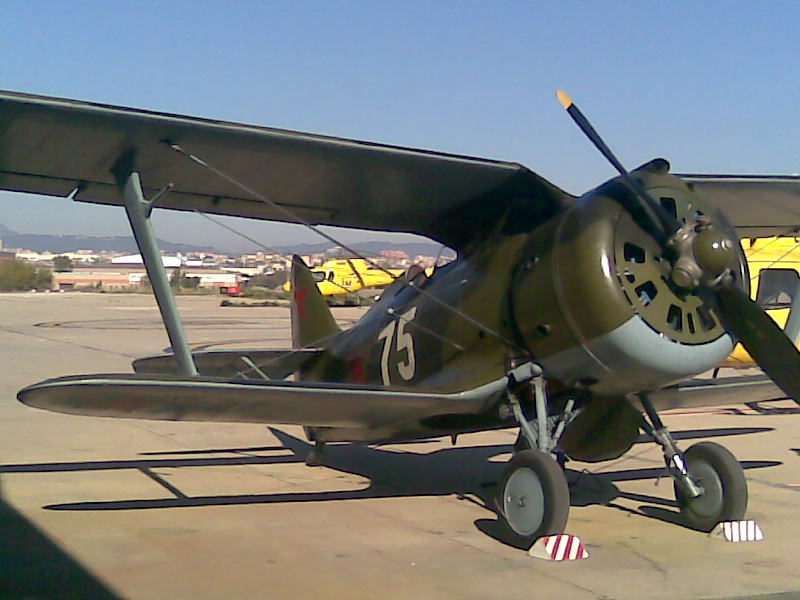
A restored Chaika. Public Domain

Despite being outmatched by the Luftwaffe both in terms of quality and numbers, I-153s did find some success as ground attack aircraft (while also suffering terrible losses), though their achievements would be overshadowed later in the war by more advanced aircraft, such as the Ilyushin Il-2. Documents submitted by the commander of the 267th IAP, Major Orlov, for example, outlined the achievements of one I-153 pilot, Junior Lieutenant Nikolai Loginov, while flying ground attack missions in the Caucasus in the late summer of 1942. Submitting a recommendation to award Loginov the Order of Lenin, Orlov wrote that from August 2nd to September 11th, the Junior Lieutenant, “flew 42 combat sorties against enemy troops for a total of 48 hours 37 minutes. In his group of ground attack aircraft he managed to destroy: automobiles = 54, carts and wagons = 6, field guns on a trailer = 1, anti-aircraft guns = 3, autobuses = 2, soldiers and officers up to 200 people.” Loginov was shot down and killed by German ace Walter Krupinski (who finished the war with 197 aerial victories) shortly thereafter. Nevertheless, his success shows that even against superior machines, the I-153, despite its shortcomings, was capable of getting the job done.

Beginning in late 1942, however, the Chaikas were gradually replaced by lend-lease aircraft such as the P-39 Airacobra and Soviet-built aircraft such as the La-5, Yak-9, and Il-2. With its ever expanding arsenal of aircraft that were equal to if not superior to the German airplanes over the Eastern Front, the VVS eventually managed to obtain and maintain air superiority, which enabled the Red Army to advance West all the way to Berlin. Though aircraft such as the I-153 did not make major contributions to the victory on the Eastern Front, they played the crucial role of helping the Soviet Union avoid a complete collapse from the German invasion in 1941. Chaika pilots certainly did not tally up kills against their German adversaries, but they did hold the Luftwaffe at bay well enough to buy time for the aerial icons of the Eastern Front, such as the Lavochkins and Yakovlevs, to roll off the assembly line and defeat the Luftwaffe.

-Patrick Kinville